
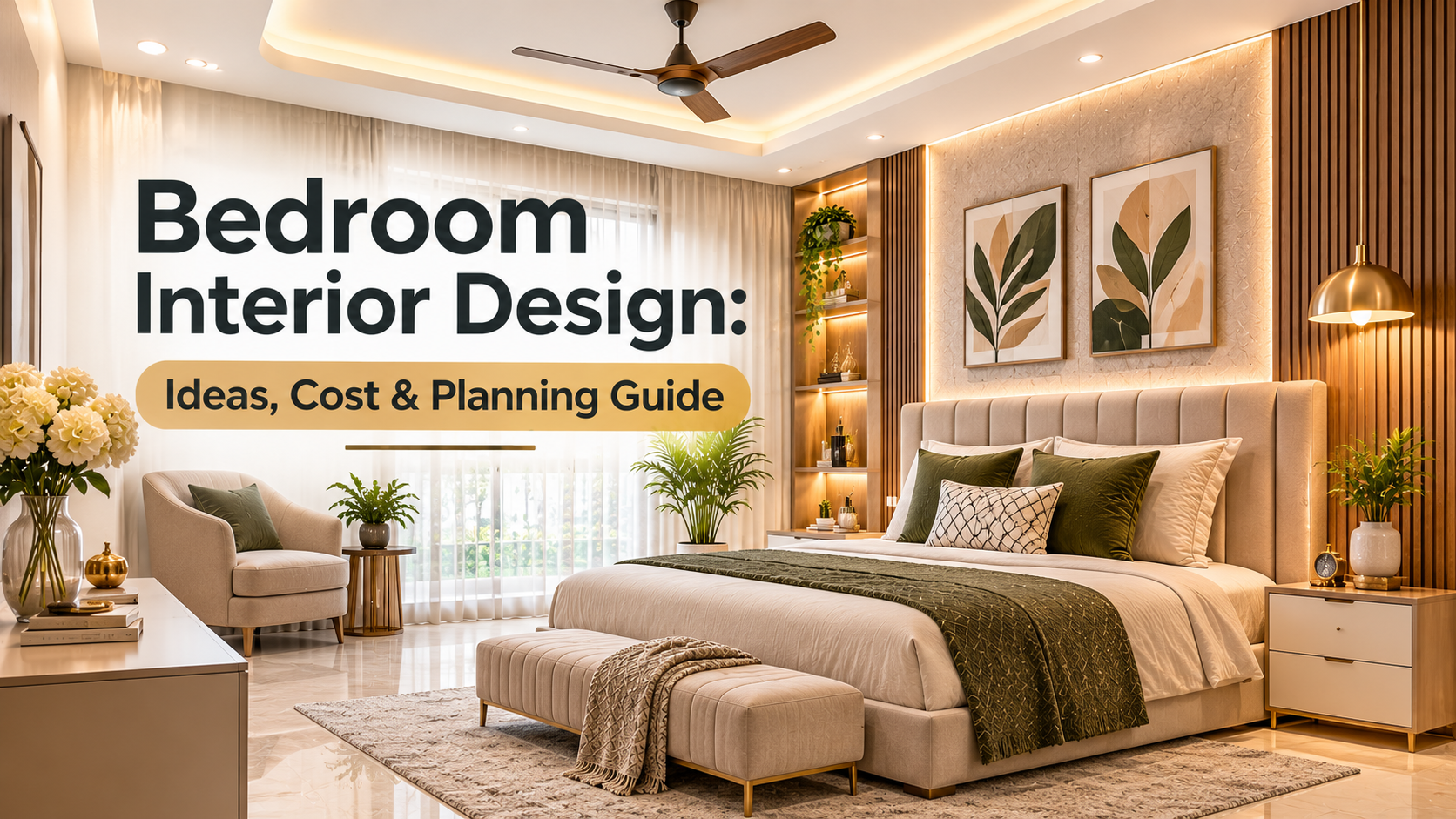
Bedroom Interior Design: Ideas, Cost & Planning Guide
3 November 202612 min readMegha Choudhary
- 1. Plan the Bedroom Interior Design Layout First
- 2. Bedroom Interior Cost in Patna
- 3. Choosing the Bed
- 4. Bed Back Wall and Wallpaper
- 5. Wardrobes and Storage
- 6. Bedroom Colours
- 7. False Ceiling
- 8. Bedroom Lighting
- 9. Materials That Last in Patna
- 10. Curtains and Soft Furnishings
- 11. Dressing Table and Side Tables
- 12. Study Corner
- 13. Designing for Each Type of Bedroom
- Master Bedroom
- Small Bedroom
- Kids' Room
- Boys' and Girls' Rooms
- Guest Bedroom
- Parents' Bedroom
- 14. Decor and Personal Touches
- 15. Bedroom Vastu
- 16. The Bedroom Interior Design Process
- 17. Common Mistakes
- Plan Your Bedroom
You spend about a third of your life in the bedroom, yet it is often the last room to get proper attention. Most budgets go to the kitchen and living room, because guests see them. The bedroom gets whatever is left, and it shows in poor storage, harsh lighting and a bed squeezed against a wall.
This guide covers bedroom interior design from layout to finishing touches. You will learn how to plan the space, what bedroom interiors cost in Patna, how to choose a bed, colours, lighting and storage, and how to design for every kind of bedroom, from master suites to kids' rooms. Each section links to a detailed guide when you want more.
Quick Summary
-
Plan the layout first: bed position, walking space and wardrobe swing decide everything else.
-
Bedroom interiors in Patna typically cost 1.5 lakh to 6 lakh per room, ₹ ₹ depending on size and finish. [VERIFY PRICE]
-
A storage bed and floor-to-ceiling wardrobe solve most storage problems.
-
Use warm white lighting in layers: a main light, bedside lamps and soft accent lights.
-
Calm, light colours work best for rest; save bold colours for one wall.
1. Plan the Bedroom Interior Design Layout First
A good bedroom starts on paper. Before you pick colours or furniture, plan where everything goes.
Start with the bed. It is the largest item and the focal point. Place it against the longest solid wall, ideally where you can see the door from bed without being directly in line with it.
Leave walking space. Keep at least 2 feet on both sides of the bed and 2.5 to 3 feet at the foot. Less than this and the room feels cramped.
Plan the wardrobe swing. Hinged wardrobe doors need about 2 feet of clear space. If the bed is closer than that, choose sliding doors.
Mark electrical points early. You will need sockets on both sides of the bed for phones and lamps, a point for the AC, one near the dressing table and one at the study table if you have one.
Typical bedroom sizes in Patna flats:
Bedroom Common Size Bed That Fits Comfortably Small / second 10×10 to 10×11 ft Queen (5×6.5 ft)
bedroom
Standard bedroom 11×12 ft Queen or king Master bedroom 12×14 ft or larger King (6×6.5 ft)
2. Bedroom Interior Cost in Patna
Bedroom cost depends on the room size, how many pieces you include and the finish level. The table below covers a typical bedroom package: wardrobe, bed with storage, side tables, bed back wall, false ceiling, lighting and painting.
| Bedroom | Basic | Mid-Range | Premium |
|---|---|---|---|
| Small (10×10 ft) | 1.5L – 2.2L<br>₹<br>₹ | 2.2L – 3.2L<br>₹<br>₹ | 3.5L – 4.5L<br>₹<br>₹ |
| Standard (11×12 ft) | 1.8L – 2.6L<br>₹<br>₹ | 2.6L – 3.8L<br>₹<br>₹ | 4L – 5.5L<br>₹<br>₹ |
| Master (12×14 ft) | 2.2L – 3.2L<br>₹<br>₹ | 3.2L – 4.5L<br>₹<br>₹ | 5L – 6.5L<br>₹<br>₹ |
The wardrobe is usually the biggest single cost, often 40–50% of the bedroom budget. A storage bed, false ceiling and wall paneling are the next biggest items.
Ask for a quote that lists every item separately, so you can drop or add pieces without guessing. At Dreemofy, every bedroom quote follows 100% pricing transparency, and no-cost EMI options are available.
3. Choosing the Bed
The bed sets the style of the whole room, so choose it before anything else.
Size. A queen bed (5×6.5 ft) suits most Indian bedrooms. A king bed (6×6.5 ft) needs a room of at least 12×12 ft to leave walking space.
Style. Upholstered beds with fabric headboards feel soft and modern. Wooden beds feel warm and classic. Low platform beds suit minimal rooms. Pick a style that matches your wardrobe and side tables.
Storage. Indian families store quilts, bedding and seasonal clothes, so a storage bed is almost always worth it. There are two main types:
-
Box storage beds have lift-off panels. They cost less but you have to remove the mattress to reach inside.
-
Hydraulic beds lift the whole mattress with gas pistons. Easier to use daily, but they cost more.
4. Bed Back Wall and Wallpaper
The wall behind the bed is the first thing you see when you walk in. It is the best place to add character.
Popular bed back wall treatments:
-
Upholstered headboard panels in fabric or leatherette: soft, warm and good for sound.
-
Wooden or laminate panels with grooves or fluted designs: clean and modern.
-
Wallpaper: patterns, textures or murals at a lower cost than paneling.
-
Texture paint: subtle depth without extra material.
-
Profile lights around the panel for a soft glow.
Keep the treatment to one wall. Doing all four walls makes the room feel busy and smaller.
In Patna's humidity, choose washable, vinyl-coated wallpaper and make sure the wall is dry before applying it. Damp walls make wallpaper bubble and peel.
5. Wardrobes and Storage
Storage is where most bedrooms fail. Clothes pile up on chairs, suitcases sit on top of the wardrobe, and the room never looks tidy.
The wardrobe. Take it floor to ceiling with a loft. This adds storage for suitcases and seasonal items, and stops dust from collecting on top. Plan the inside around your actual clothes: long hanging for sarees and dresses, short hanging for shirts, shelves for folded clothes and drawers for small items. Our [FUTURE LINK: wardrobe design → /wardrobedesign] guide covers types, materials and costs in detail.
Other storage ideas:
- Storage beds for quilts and bedding
-
Floating shelves above the study table or bed
-
Side tables with drawers instead of open stands
-
Under-window seating with storage below
-
Loft cabinets above the bedroom door
6. Bedroom Colours
Colour affects how restful a bedroom feels. Soft, light shades work best for sleep.
Safe base colours: warm white, beige, soft grey, sage green, powder blue and dusty pink.
Simple rules:
-
Use one main colour on most walls.
-
Add a deeper shade or texture on the bed back wall.
-
Pull in a third accent colour through cushions, curtains or a rug.
-
Light colours make small bedrooms feel bigger.
-
North-facing rooms get less direct sun, so warmer tones keep them cosy.
Popular two-colour combinations include beige and walnut, white and sage green, grey and mustard, and blue and white.
7. False Ceiling
A false ceiling hides wires, holds lights and adds depth to the room. In bedrooms, keep the design simple so it does not feel heavy over the bed.
-
Peripheral (border) ceiling: a drop around the edges with cove lighting. The most popular choice for bedrooms.
-
Floating panel above the bed: a rectangular panel with hidden lights, aligned to the bed.
-
Simple flat ceiling with spotlights: clean and minimal for lower ceilings.
Most Patna flats have ceilings around 10 feet. Keep at least 8.5 to 9 feet of clear height after the false ceiling so the room does not feel low. Gypsum board is the most common material; it is lighter and smoother than POP.
8. Bedroom Lighting
One bright ceiling light is the most common bedroom mistake. It is too harsh at night and leaves corners dark.
Plan three layers:
-
Ambient light: cove lights in the false ceiling or a central fixture for general brightness.
-
● Task light: bedside lamps or wall-mounted reading lights, plus a light at the dressing table and study table.
-
Accent light: profile lights behind the headboard or inside the wardrobe.
Use warm white light (2700K–3000K) in bedrooms. It is easier on the eyes and helps you wind down. Put bedside lights on switches you can reach from bed, and consider two-way switches for the main light.
9. Materials That Last in Patna
Patna's monsoon brings high humidity, and the summer brings heat and dust. Both affect bedroom furniture.
-
Wardrobe and bed carcass: use MR plywood for most bedroom furniture, and BWP plywood for anything against an outer wall or a wall shared with a bathroom.
-
Finishes: matte laminate resists scratches and hides fingerprints. Gloss shows dust quickly.
-
Upholstery: choose fabrics that can be cleaned easily. Dark or textured fabrics hide dust better.
-
Termite protection: use treated plywood and get pest control done before the monsoon.
-
Damp walls: fix seepage before installing wardrobes or paneling, or leave a small air gap behind.
Look for plywood that carries the Bureau of Indian Standards mark (IS 303).
Every Dreemofy bedroom goes through 150+ quality checks, from plywood grade to door alignment, before handover.
10. Curtains and Soft Furnishings
Curtains, bedding and rugs make a bedroom feel finished and comfortable.
Curtains. Use two layers: sheer curtains for daytime privacy with light, and blackout curtains for sleep. Summer mornings in Patna get bright early, so blackout fabric makes a real difference. Mount the rod close to the ceiling and let curtains fall to the floor to make the room look taller.
Bedding. Cotton bedding suits Patna's warm weather. Keep the base neutral and add colour through cushions and throws.
Rugs. A rug under the lower two-thirds of the bed softens the room and feels good underfoot in winter.
11. Dressing Table and Side Tables
Dressing table. You can choose a standalone unit, a wall-mounted table that saves floor space, or a dressing unit built into the wardrobe. Add a mirror with good lighting around it. Place it near natural light if possible, so make-up looks true. See [FUTURE LINK: dressing table design → /dressing-table-design].
Side tables. Keep them at the same height as your mattress or slightly higher. Choose ones with drawers to hide chargers and small items. In small rooms, floating side tables or narrow wall shelves save floor space.
12. Study Corner
With more people working and studying from home, many bedrooms now need a desk.
Place the study table near a window for natural light, but not where the screen will get glare. A wall-mounted or foldable table saves space in small rooms. Add shelves above for books and files, and a task light. Make sure there are enough sockets for a laptop, phone and lamp.
13. Designing for Each Type of Bedroom
Different bedrooms serve different people. Design each one for who uses it.
Master Bedroom
The largest bedroom, usually with an attached bathroom. It can hold a king bed, a full wardrobe, a dressing area and sometimes a small seating corner.
Small Bedroom
Every inch counts. Use a storage bed, sliding wardrobe, wall-mounted furniture, light colours and mirrors.
Kids' Room
Plan for growth. Use adjustable shelves, rounded edges, a study table that can be raised, and storage children can reach.
Boys' and Girls' Rooms
For teenagers, give them a say in colours and themes. Bunk beds or loft beds save space in shared rooms.
Guest Bedroom
Keep it simple and flexible. A sofa-cum-bed or day bed lets the room work as a study or TV room when guests are not staying.
Parents' Bedroom
Focus on comfort and safety: a bed at a comfortable sitting height, good lighting at night, antiskid flooring, grab bars in the attached bathroom and easy-to-reach storage.
14. Decor and Personal Touches
Decor turns a well-designed bedroom into your own space. Add family photos, a piece of art above the bed, a few indoor plants like snake plant or pothos, and scented candles or diffusers. Keep surfaces clear; a calm bedroom has fewer things on display.
For special occasions like anniversaries or a newly married couple's room, fairy lights, fresh flowers and soft fabrics create a warm feel without permanent changes.
15. Bedroom Vastu
Many families plan bedrooms as per Vastu. Common guidelines suggest:
-
The master bedroom is best in the south-west of the home.
-
Sleep with your head towards the south or east.
-
Avoid placing a mirror directly facing the bed.
-
Keep the area under the bed clutter-free.
-
Use soft, earthy colours.
Most of these can be followed through furniture placement, without changing walls.
16. The Bedroom Interior Design Process
| Step | What Happens | Typical<br>Time |
|---|---|---|
| 1. Consultation | Discuss needs, style and budget | 1 day |
| 2. Site measurement | Measure room, check walls for damp, mark<br>electrical points | 1 day |
| 3. Design and 3D view | Layout, furniture, colours and lighting plan | 5–7 days |
| 4. Quote and sign-off | Itemised quote, design freeze | 1–2 days |
| 5. Civil work | Electrical, false ceiling, painting prep | 5–10 days |
| 6. Factory production | Wardrobe, bed, side tables, panels | 2–3 weeks |
| 7. Installation and<br>finishing | Fitting, painting, lights, cleaning | 5–7 days |
When bedrooms are part of a full home project, Dreemofy's 45-day move-in guarantee means your home is ready within 45 days of design sign-off.
17. Common Mistakes
-
Too few sockets near the bed. You end up with extension boards on the floor.
-
A bed too big for the room. Walking space disappears.
-
Only one ceiling light. Harsh at night, dark in corners.
-
Shallow wardrobes. Anything under 21 inches deep crushes clothes against the doors.
-
Ignoring the curtains. Thin curtains let in early summer light and ruin sleep.
-
Treating every wall. Too many panels and patterns make the room feel busy.
-
Wallpaper on a damp wall. It bubbles and peels after the first monsoon.
Plan Your Bedroom
A good bedroom interior design is built around rest: a well-placed bed, enough storage to keep clutter away, soft colours and layered lighting. If you are planning a new bedroom or redoing an old one, book a free design consultation. We will measure your room, plan the layout and give you an itemised quote, with no obligation. Every Dreemofy bedroom comes with a 10-year warranty.